 VIE
Currently, cGMP is implemented through different systems of standards and regulations, among which the following are the most common:
- cGMP FDA: Current Good Manufacturing Practice regulations issued by the U.S. Food and Drug Administration (FDA), applicable to industries such as pharmaceuticals, food, and cosmetics in accordance with the relevant regulations in the United States.
- cGMP ASEAN: A set of Good Manufacturing Practice (GMP) guidelines for cosmetics developed within the framework of ASEAN cooperation, applicable to cosmetic manufacturing in Southeast Asian countries.
In Vietnam, cGMP ASEAN is a particularly important set of requirements for cosmetic manufacturers to consider in order to comply with applicable Good Manufacturing Practice requirements.
1. cGMP ASEAN Standard
1.1 Overview of ASEAN Good Manufacturing Practices for Cosmetics
cGMP ASEAN (ASEAN Cosmetic Good Manufacturing Practice) is a standard for Good Manufacturing Practices for cosmetics established within the framework of ASEAN cooperation to harmonize cosmetic regulations across Southeast Asia. This standard sets out principles for controlling manufacturing activities to ensure that cosmetics are consistently manufactured and controlled in accordance with established quality requirements.
The abbreviation stands for:
- c – Cosmetic: Refers to cosmetics and identifies the scope of application of the standard.
- GMP – Good Manufacturing Practice: Refers to Good Manufacturing Practice, including requirements for controlling factors that affect quality during the manufacturing process.
- ASEAN: The Association of Southeast Asian Nations, within the framework of regional cooperation to harmonize cosmetic regulations.

The ASEAN Good Manufacturing Practices (GMP) requirements for cosmetics were developed within the framework of the Agreement on the ASEAN Harmonized Cosmetic Regulatory Scheme, signed on September 2, 2003, in Phnom Penh. The Agreement aims to harmonize cosmetic regulatory requirements among member states, including requirements for Good Manufacturing Practices.
1.2 Scope of Application of cGMP ASEAN in Cosmetic Manufacturing
cGMP ASEAN applies to cosmetic manufacturing in Southeast Asian countries, with requirements aimed at controlling quality throughout the manufacturing process. Its scope of application includes:
- Applicable entities: Cosmetic manufacturing facilities, including those producing cosmetics under their own brands or providing contract manufacturing services.
- Applicable activities: Processes related to cosmetic manufacturing, from raw material handling and production to packaging and quality control.
In Vietnam, cosmetic manufacturing facilities must meet the manufacturing conditions stipulated by current regulations, including requirements for Good Manufacturing Practices for cosmetics. Under Circular No. 06/2011/TT-BYT and its amending and supplementary documents, facilities must comply with the regulations applicable to their manufacturing activities.
2. Legal Regulations on cGMP ASEAN in Vietnam
In Vietnam, the implementation of ASEAN Good Manufacturing Practices (GMP) for cosmetics is addressed in the following legal documents:
- Decision No. 24/2006/QD-BYT, dated August 14, 2006: Issued by the Ministry of Health, this Decision provides guidance on implementing ASEAN GMP principles and standards at cosmetic manufacturing facilities. According to the accompanying implementation plan, cosmetic manufacturing facilities were required to operate in accordance with these principles and standards from January 1, 2008.
- Circular No. 06/2011/TT-BYT on Cosmetic Management: This Circular regulates cosmetic management in Vietnam, including the documentation and procedures related to the issuance of certificates confirming compliance with ASEAN Cosmetic GMP standards for export purposes.
-
Circular No. 34/2025/TT-BYT: This Circular amends and supplements certain provisions on cosmetic management under Circular No. 06/2011/TT-BYT.
Note: The Certificate of Compliance with ASEAN Cosmetic GMP Standards and the Certificate of Eligibility for Cosmetic Manufacturing are two different documents. Businesses should identify the appropriate certificate and applicable procedures in accordance with current regulations.
Application Documents for Inspection
Under Article 34 of Circular No. 06/2011/TT-BYT, cosmetic manufacturing facilities seeking certification must submit an inspection application to the Drug Administration of Vietnam – Ministry of Health. The application dossier includes:
- An application form for cGMP ASEAN inspection, as specified in Appendix 13-MP issued together with Circular No. 06/2011/TT-BYT.
- A notarized copy of the business registration certificate or investment license.
- The organizational chart, information on personnel responsible for each department, and relevant professional experience.
- Training records on Good Manufacturing Practices for cosmetics, including the training program, list of trained personnel, and assessment results.
- Site layout and factory design plans, personnel and material flow diagrams, and the waste treatment system.
- A list of manufacturing equipment and quality control equipment.
- A list of products currently manufactured or planned for production.
- The most recent internal audit report, conducted within the past 12 months, together with the audit results and corrective action plan, if any.
Businesses seeking clarification on the cGMP ASEAN requirements applicable to cosmetic manufacturing may contact SQS Global for support in assessing their level of compliance with the standard’s requirements.
Contact a Consulting Expert3. Key Control Requirements of Good Manufacturing Practices for Cosmetics
To ensure the quality and safety of cosmetic products, the standard establishes control requirements throughout the manufacturing process. These requirements cover the following 12 main areas:
- Quality Management System: Establish procedures, assign responsibilities, and implement quality control mechanisms across all manufacturing activities.
- Personnel: Ensure that employees have appropriate qualifications, receive training, and comply with personal hygiene requirements.
- Premises: Arrange manufacturing areas appropriately, maintain hygienic conditions, and minimize the risk of contamination and cross-contamination.
- Equipment: Use equipment suitable for its intended purpose and ensure that it is cleaned, maintained, and calibrated when necessary.
- Sanitation and Hygiene: Establish hygiene requirements for personnel, premises, and equipment to minimize risks that could affect product quality.
- Production Processes: Control each stage, from raw material receipt and mixing to processing and packaging, in accordance with established procedures.
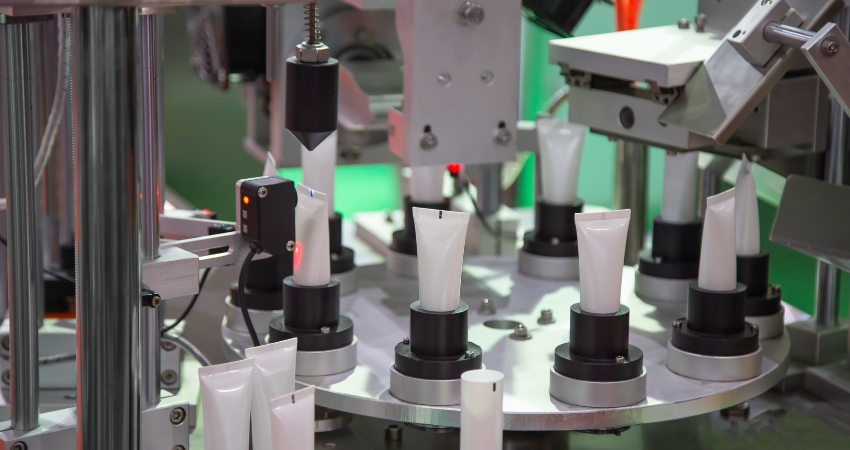
- Quality Control: Inspect raw materials, semi-finished products, and finished products against appropriate quality criteria before use or release.
- Documentation and Records: Record and maintain information on raw materials, manufacturing processes, inspection results, and related activities to support traceability.
- Internal Audits: Periodically assess compliance, identify non-conformities, and implement corrective actions.
- Storage: Control storage conditions for raw materials, packaging materials, and finished products; organize and classify them clearly to prevent mix-ups or quality deterioration.
- Contract Manufacturing and Testing: Clearly define responsibilities between the parties and control the quality of outsourced activities.
- Complaints and Product Recalls: Receive and investigate quality-related complaints, and establish recall procedures when products are found to have issues requiring corrective action.
Businesses can download the cGMP ASEAN requirements guide here to review the full set of standard requirements.
4.cGMP ASEAN and ISO 22716 Standards
4.1 Similarities
Both cGMP ASEAN and ISO 22716 provide guidelines for Good Manufacturing Practices (GMP) for cosmetics. They aim to control product quality, ensure product safety, and minimize risks throughout the manufacturing process.
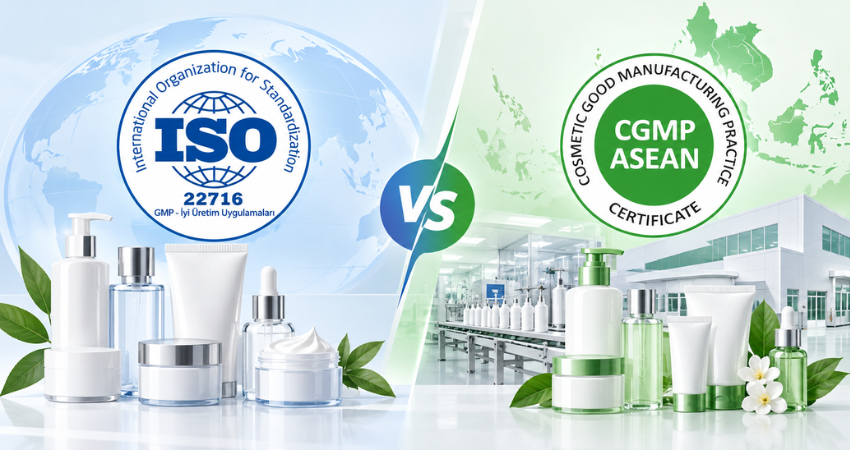
The two standards share many similar requirements, including those related to personnel, premises, equipment, sanitation, production processes, quality control, storage, and recordkeeping. Their implementation helps businesses standardize manufacturing operations, improve product quality, and enhance their ability to meet customer and market requirements.
4.2 Differences
Although they share many similarities, these two guidelines differ in terms of the issuing body, scope of application, and legal status. Businesses should understand these differences to select the appropriate standard based on applicable regulations and their target market strategies.
| Criteria | cGMP ASEAN | ISO 22716 |
|---|---|---|
| Issuing body | ASEAN Cosmetic GMP guidelines established within the ASEAN framework | International Organization for Standardization (ISO) |
| Scope of application | Southeast Asia | Global |
| Field of application | Good Manufacturing Practices for cosmetics | GMP guidelines covering the manufacturing, control, storage, and transportation of cosmetic products |
| Main objective | To control cosmetic manufacturing processes within the ASEAN region | To improve product quality and reliability worldwide |
| Legal status in Vietnam | Cosmetic manufacturing facilities must meet GMP requirements in accordance with Vietnamese law. | A voluntary standard, unless required by applicable regulations, contracts, or specific markets; it does not automatically replace cGMP ASEAN requirements. |
| Certifying body | The Drug Administration of Vietnam – Ministry of Health conducts assessments and issues certificates in accordance with applicable procedures. | A competent certification body conducts assessments and issues ISO 22716 certificates. |
4.3 Which Standard Should Cosmetic Manufacturers Choose?
The choice between cGMP ASEAN and ISO 22716 depends on the target market, legal requirements, and business development objectives.
- When to apply cGMP ASEAN: Businesses manufacturing cosmetics in Vietnam for the domestic market and other ASEAN countries should comply with applicable GMP requirements under current regulations. The Ministry of Health publishes the procedures for issuing ASEAN Cosmetic GMP certificates on the National Public Service Portal.
- When to apply ISO 22716 (or implement it alongside cGMP ASEAN): Businesses seeking to standardize manufacturing operations in accordance with international GMP guidelines, expand into export markets, or meet specific requirements from overseas customers and business partners, particularly in markets such as the EU and the United States, may consider applying ISO 22716.
Advice from SQS Global: Businesses should first identify and meet the applicable cGMP ASEAN requirements to ensure compliance with domestic regulations, then consider implementing ISO 22716 based on their export objectives.
Before making a decision, businesses should review current regulations and the specific requirements of their partners and target markets to avoid unnecessary investment.
5. FAQ – Frequently Asked Questions About cGMP ASEAN
Yes. Businesses that outsource cosmetic manufacturing must select manufacturing facilities that meet the applicable legal requirements.
Compliance primarily applies to manufacturing activities carried out at the contract manufacturing facility. However, the business commissioning the manufacturing remains responsible for the quality and safety of its products in accordance with relevant regulations.
If the manufacturing activity falls within the scope of cosmetic manufacturing regulations, the facility must still meet the applicable legal requirements. Handmade production or small-scale manufacturing does not automatically exempt a facility from these requirements.
No. cGMP ASEAN applies to cosmetic manufacturing, while pharmaceutical GMP applies to drug manufacturing. Both aim to ensure product quality, but each has specific control requirements appropriate to its respective industry.
** Conclusion
cGMP ASEAN is an important requirement for cosmetic manufacturing facilities in Vietnam. Compliance with Good Manufacturing Practices for cosmetics not only helps control product quality but is also mandatory under current regulations.
Businesses should proactively meet cGMP ASEAN requirements to maintain compliant manufacturing operations and serve the domestic and Southeast Asian cosmetics markets.