Get HACCP Certified Faster with Expert Consulting, Training & Certification Services

✓  Certification listed on the international verification platform IAF CertSearch

✓ ISO 22000 certification issued through SQS Global is supported by internationally recognized accreditation from IAF and BoA

✓ Experienced food safety experts providing consulting, training, and implementation support directly at your facility

✓ Support businesses in meeting customer requirements, joining global supply chains, and expanding distribution and export opportunities

✓ Complete HACCP certification services, including consulting, training, auditing, and certification with cost-effective solutions

Chứng nhận HACCP cho nhà máy thực phẩm

Get HACCP Certified Faster with Expert Consulting, Training & Certification Services

✓  Certification listed on the international verification platform IAF CertSearch

✓ ISO 22000 certification issued through SQS Global is supported by internationally recognized accreditation from IAF and BoA

✓ Experienced food safety experts providing consulting, training, and implementation support directly at your facility

✓ Support businesses in meeting customer requirements, joining global supply chains, and expanding distribution and export opportunities

✓ Complete HACCP certification services, including consulting, training, auditing, and certification with cost-effective solutions

Chứng nhận HACCP cho nhà máy thực phẩm

When should your business implement HACCP?

As food safety requirements continue to become more stringent, HACCP has become one of the most widely adopted food safety standards for businesses seeking to strengthen management practices, meet customer expectations, and expand market opportunities.

Implementing HACCP is especially beneficial when your business aims to:

  • Supply products to supermarkets, retail chains, and modern distribution networks
  • Partner with brands, distributors, and major business customers
  • Meet export market requirements
  • Participate in tenders or become an approved supplier for large organizations
  • Enhance brand reputation and food safety management capabilities

In addition, HACCP serves as a strong foundation for achieving higher-level international standards such as ISO 22000, FSSC 22000, and BRCGS, helping businesses remain competitive in both domestic and global markets.

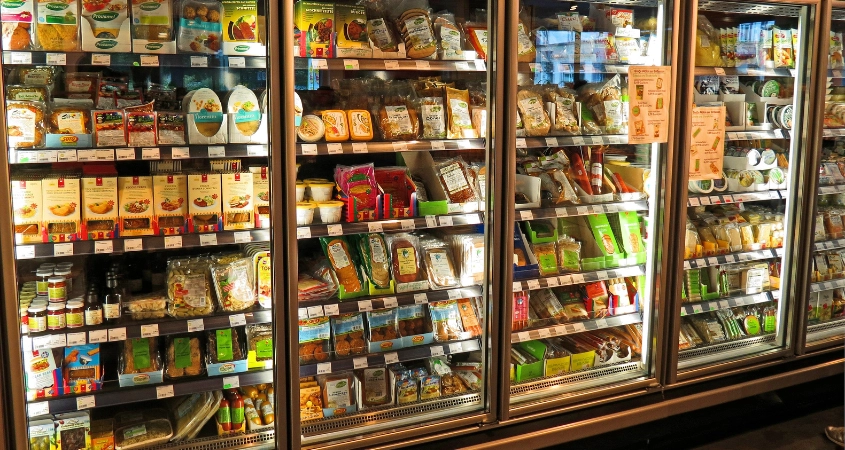
Chứng nhận HACCP siêu thị

When should your business implement HACCP?

As food safety requirements continue to become more stringent, HACCP has become one of the most widely adopted food safety standards for businesses seeking to strengthen management practices, meet customer expectations, and expand market opportunities.

Implementing HACCP is especially beneficial when your business aims to:

  • Supply products to supermarkets, retail chains, and modern distribution networks
  • Partner with brands, distributors, and major business customers
  • Meet export market requirements
  • Participate in tenders or become an approved supplier for large organizations
  • Enhance brand reputation and food safety management capabilities

In addition, HACCP serves as a strong foundation for achieving higher-level international standards such as ISO 22000, FSSC 22000, and BRCGS, helping businesses remain competitive in both domestic and global markets.

Chứng nhận HACCP siêu thị

Industries eligible for HACCP certification

HACCP is applicable to a wide range of organizations across the food supply chain, helping businesses identify, prevent, and control food safety hazards throughout production, processing, storage, and distribution activities.

Food Production & Processing Animal-Based Food Products Food Service (F&B) Food Supply Chain Support
  • Fruits, vegetables & agricultural products
  • Seafood processing
  • Canned food products
  • Confectionery & dried food products
  • Seasonings & food ingredients
  • Milk & dairy products
  • Beef, pork & poultry products
  • Processed meat products
  • Restaurants
  • Hotels
  • Fast-food chains
  • Industrial catering services
  • Meal preparation services
  • Food packaging materials
  • Cold storage facilities
  • Warehousing & storage services
  • Food logistics & distribution

Industries eligible for HACCP certification

HACCP is applicable to a wide range of organizations across the food supply chain, helping businesses identify, prevent, and control food safety hazards throughout production, processing, storage, and distribution activities.

Animal-Based Food Products
  • Milk & dairy products
  • Beef, pork & poultry products
  • Processed meat products
Food Service (F&B)
  • Restaurants
  • Hotels
  • Fast-food chains
  • Industrial catering services
  • Meal preparation services
Food Supply Chain Support
  • Food packaging materials
  • Cold storage facilities
  • Warehousing & storage services
  • Food logistics & distribution
Food Production & Processing
  • Fruits, vegetables & agricultural products
  • Seafood processing
  • Canned food products
  • Confectionery & dried food products
  • Seasonings & food ingredients

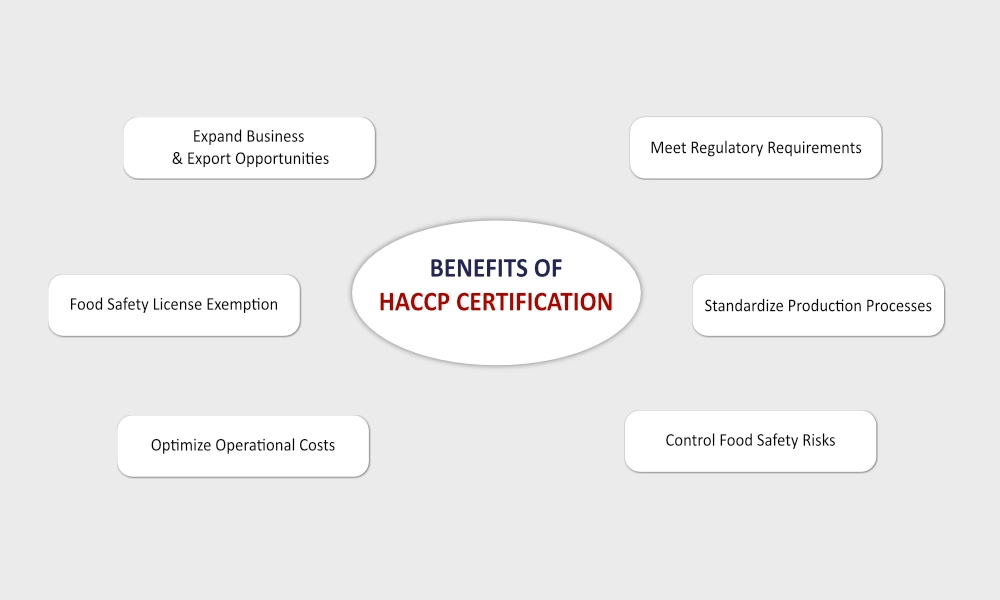
Key benefits of HACCP certification for businesses

HACCP certification is more than a compliance requirement – it is a strategic investment that helps businesses strengthen food safety management, improve operational performance, and enhance competitiveness in both domestic and international markets.

Expand Business & Opportunities

  • Meet the requirements of customers, retailers, and distribution networks
  • Increase opportunities to become an approved supplier for multinational companies and global brands
  • Facilitate access to export markets such as the EU, the United States, Japan, and South Korea
  • Strengthen competitiveness when bidding for contracts and securing major business partnerships

Food Safety License Exemption

  • HACCP certification may serve as a basis for exemption from certain food safety licensing requirements, subject to local regulations
  • Reduce administrative procedures related to food safety compliance
  • Minimize preparation time for inspections and regulatory reviews
  • Facilitate interactions with regulatory authorities

Optimize Operational Costs

  • Reduce product defects, recalls, and waste
  • Minimize material losses through better process control
  • Lower costs associated with complaints and food safety incidents
  • Improve the efficiency of workforce, equipment, and production resources

Meet Regulatory Requirements

  • Demonstrate compliance with applicable food safety regulations
  • Meet customer, supplier, and third-party audit requirements
  • Reduce the risk of penalties related to food safety violations
  • Build a solid foundation for ISO 22000, FSSC 22000, and other food safety standards

Standardize Production Processes

  • Establish a systematic food safety management framework based on HACCP principles
  • Standardize control measures from raw materials to finished products
  • Reduce operational errors and process inconsistencies
  • Improve product quality, consistency, and production efficiency

Control Food Safety Risks

  • Identify and manage biological, chemical, and physical hazards
  • Effectively monitor Critical Control Points (CCPs)
  • Reduce the risk of food safety incidents and product recalls
  • Protect brand reputation and strengthen customer confidence

Key benefits of HACCP certification for businesses

HACCP certification is more than a compliance requirement – it is a strategic investment that helps businesses strengthen food safety management, improve operational performance, and enhance competitiveness in both domestic and international markets.

Expand Business & Opportunities

  • Meet the requirements of customers, retailers, and distribution networks
  • Increase opportunities to become an approved supplier for multinational companies and global brands
  • Facilitate access to export markets such as the EU, the United States, Japan, and South Korea
  • Strengthen competitiveness when bidding for contracts and securing major business partnerships

Food Safety License Exemption

  • HACCP certification may serve as a basis for exemption from certain food safety licensing requirements, subject to local regulations
  • Reduce administrative procedures related to food safety compliance
  • Minimize preparation time for inspections and regulatory reviews
  • Facilitate interactions with regulatory authorities

Optimize Operational Costs

  • Reduce product defects, recalls, and waste
  • Minimize material losses through better process control
  • Lower costs associated with complaints and food safety incidents
  • Improve the efficiency of workforce, equipment, and production resources

Meet Regulatory Requirements

  • Demonstrate compliance with applicable food safety regulations
  • Meet customer, supplier, and third-party audit requirements
  • Reduce the risk of penalties related to food safety violations
  • Build a solid foundation for ISO 22000, FSSC 22000, and other food safety standards

Standardize Production Processes

  • Establish a systematic food safety management framework based on HACCP principles
  • Standardize control measures from raw materials to finished products
  • Reduce operational errors and process inconsistencies
  • Improve product quality, consistency, and production efficiency

Control Food Safety Risks

  • Identify and manage biological, chemical, and physical hazards
  • Effectively monitor Critical Control Points (CCPs)
  • Reduce the risk of food safety incidents and product recalls
  • Protect brand reputation and strengthen customer confidence

HACCP consulting & Certification process at SQS Global

SQS Global provides comprehensive HACCP consulting, training, auditing, and certification services for food businesses. Our HACCP certification process is designed to help organizations establish an effective food safety management system, meet regulatory requirements, and strengthen their competitiveness in domestic and international markets.

1 | Initial consultation & Project review

  • Gather information regarding the organization’s operations, products, production processes, and current food safety practices.
  • Provide an overview of HACCP requirements, implementation roadmap, and key preparation activities prior to certification.

2 | Facility assessment & Gap analysis

  • Evaluate production facilities, sanitation conditions, existing documentation, and food safety control measures.
  • Identify gaps against HACCP requirements and develop an implementation plan tailored to the organization’s needs.

3 | HACCP Training

  • Conduct HACCP awareness and implementation training for management teams, HACCP team members, and relevant personnel.
  • Training covers HACCP principles, GMP, SSOP, hazard analysis, and practical system implementation.

4 | HACCP system development

  • Assist in developing and implementing HACCP documentation, including procedures, work instructions, forms, and records.
  • Ensure the HACCP system is practical, compliant, and aligned with daily operations.

5 | Internal audit & Certification preparation

  • Perform internal audits to evaluate the effectiveness and compliance of the HACCP system.
  • Support corrective actions, documentation improvements, and preparation for the certification audit.

6 | Duy trì & cải tiến hệ thống HACCP

  • SQS Global reviews the effectiveness of the HACCP system and verifies compliance with certification requirements.

  • Once all certification requirements are met, SQS Global issues the HACCP certificate within the approved scope

Note: HACCP certification is valid for three (3) years. During this period, SQS Global conducts periodic surveillance audits to ensure the food safety management system is maintained, continuously improved, and remains compliant with HACCP requirements.

HACCP Certificate Issued by SQS Global

Upon successful completion of the HACCP consulting, training, system implementation, and certification process, your organization will receive a HACCP Certificate covering the approved certification scope.

The certificate demonstrates that your Food Safety Management System has been independently assessed and found to comply with HACCP requirements, helping strengthen customer confidence, enhance business credibility, and support market expansion.

Get Started Today – Enjoy 10% Off
HACCP certificate SQS Global

Why businesses choose SQS Global for HACCP certification?

Not all HACCP certification providers deliver the same level of value. Beyond certification services, businesses need a reliable partner that can provide consulting, training, and ongoing support to ensure HACCP systems are effectively implemented and continuously improved to meet customer, regulatory, and market requirements.

Tư vấn

End-to-End consulting & certification

From gap assessment and HACCP system development to training, auditing, and certification, SQS Global provides comprehensive support throughout the entire certification journey.

giải pháp

Practical solutions

Implementation plans are designed based on your organization’s size, industry sector, and business objectives, ensuring the HACCP system is both effective and sustainable.

tối ưu chí phí & thời gian

Time & Cost efficiency

We help businesses prepare documentation, records, and objective evidence efficiently, reducing implementation time and avoiding unnecessary costs during the certification process.

Đánh giá cấp chứng nhận

Independent & Objective audits

Certification audits are conducted through a transparent and professional process, helping organizations strengthen food safety management and meet customer and regulatory expectations.

Tái đánh giá

Ongoing Support

SQS Global supports businesses in maintaining HACCP systems, preparing for surveillance audits, and advancing to international standards such as ISO 22000, FSSC 22000, and BRCGS when required.

Experienced industry experts

Our experts have extensive knowledge of food safety management and HACCP implementation, helping businesses develop practical systems tailored to their operations and industry requirements.

Frequently asked questions about HACCP certification services

The HACCP implementation and certification process typically takes 1–3 months, depending on the size of the organization, the maturity of existing management systems, and the readiness of documentation. Businesses with established quality management practices may achieve certification in a shorter timeframe.

The cost of HACCP certification varies based on several factors, including company size, number of employees, business activities, certification scope, and the current level of system readiness. Contact SQS Global for a tailored quotation and professional consultation.

Organizations typically need to prepare the following documents:

  • Business registration certificate
  • Product information and production processes
  • Facility layout and process flow diagrams
  • Equipment and machinery lists
  • Relevant personnel records
  • Existing quality and food safety documentation (if available)

SQS Global experts will provide detailed guidance based on your business type and certification scope.

In most cases, a separate HACCP system is not required because HACCP principles are already integrated into ISO 22000. However, depending on customer, regulatory, or market requirements, organizations may still choose to obtain standalone HACCP certification.

Other Certification Services Offered by SQS Global

Pharmaceutical & Cosmetics Industry

ISO 13485

ISO 13485 Certification

Other Certification Services Offered by SQS Global

Pharmaceutical & Cosmetics Industry

ISO 13485

ISO 13485 Certification