

 VIE
VIE📌 Summary
- ISO 15378:2017 is a quality management system standard for organizations that manufacture primary packaging materials used for medicinal products. It incorporates the requirements of ISO 9001:2015 together with relevant GMP requirements.
- The standard focuses on controlling factors that may affect the quality of primary packaging materials, including raw materials, suppliers, production, hygiene, contamination, traceability, deviations, and change control.
- ISO 15378:2017/Amd 1:2024 adds requirements related to climate change. This article also explains the key requirements of the standard and the differences between ISO 15378, ISO 9001, and GMP.
1. What is ISO 15378?
ISO 15378 is an international standard that specifies requirements for a quality management system (QMS) for primary packaging materials used for medicinal products.
The standard applies the requirements of ISO 9001:2015 and adds GMP requirements relevant to primary packaging materials used for medicinal products. Organizations applying the standard are required to establish and control processes that can affect product quality, from raw materials, production, inspection, and storage through to product supply.
The standard focuses on controlling factors that may affect the conformity and quality of packaging materials, including contamination, mix-ups, production deviations, change control, traceability, and supplier management.
Các phiên bản ISO 15378
ISO 15378 has been published through four main editions from 2006 to 2017.
| Version | Publication Date | Key Highlights |
| ISO 15378:2006 | March 1, 2006 | The first edition, combining the requirements of ISO 9001:2000 with GMP. |
| ISO 15378:2011 | October 25, 2011 | Transitioned to the ISO 9001:2008 framework and updated quality management and GMP requirements. |
| ISO 15378:2015 | October 6, 2015 | Remained based on ISO 9001:2008 and was subsequently replaced by the 2017 edition. |
| ISO 15378:2017 | September 14, 2017 | The current edition. It transitioned from ISO 9001:2008 to ISO 9001:2015 while maintaining GMP requirements applicable to primary packaging materials used for medicinal products. |
| ISO 15378:2017/Amd 1:2024 | February 23, 2024 | An amendment adding content related to climate change action. |
Note: ISO 15378:2017/Amd 1:2024 is an Amendment to the 2017 edition, not a new edition called ISO 15378:2024.
2. What is new in ISO 15378:2017 and what is Amendment 1:2024?
The 2017 edition introduced an important change to the quality management system framework, transitioning from ISO 9001:2008 to ISO 9001:2015.
With this transition, organizations need to place greater emphasis on:
- Understanding the organization’s context: Identifying issues and interested parties that may affect the organization’s ability to meet product requirements and quality management system requirements.
- Strengthening the risk-based approach: Identifying risks and opportunities that may affect quality and implementing appropriate controls.
- Stronger change control: Changes that may affect the management system or product quality need to be reviewed and controlled before implementation.
- Maintaining industry-specific GMP requirements: In addition to the requirements of ISO 9001:2015, the 2017 edition continues to specify GMP requirements applicable to primary packaging materials used for medicinal products.
What Is Amendment 1:2024?
Amendment 1:2024 focuses on “Climate action changes,” introducing changes related to climate change action.
Specifically, organizations are required to consider:
- Whether climate change is a relevant issue for their quality management system.
- Whether relevant interested parties have requirements related to climate change.
It is important to note that Amendment 1:2024 does not introduce a new standard, nor does it mean that every organization must establish a separate environmental management system. The amendment requires organizations to consider the relevance of climate change within their organizational context and quality management system.
** Download the ISO 15378:2017 standard for reference and more detailed information on the requirements.
3. Requirements for Pharmaceutical Primary Packaging Materials
This standard applies the requirements of ISO 9001:2015 together with relevant GMP requirements for primary packaging materials used for medicinal products. The main requirements include:
- Clause 4 – Context of the organization: Identifying issues, interested parties, and the scope that may affect the quality management system. Amendment 1:2024 adds the requirement to consider climate change when determining the organizational context.
- Clause 5 – Leadership: Top management must demonstrate commitment to the quality management system, define responsibilities, and ensure that quality and GMP requirements are implemented.
- Clause 6 – Planning: Identifying and controlling risks, opportunities, and changes that may affect the quality of primary packaging materials.
- Clause 7 – Support: Ensuring the personnel, infrastructure, work environment, equipment, and documented information necessary for production activities.

- Clause 8 – Operation: Controlling activities from design, procurement, and supplier management through production, inspection, storage, and delivery, while applying relevant GMP requirements.
- Clause 9 – Performance evaluation: Monitoring and evaluating the effectiveness of the system through data, customer and supplier feedback, internal audits, and management review.
- Clause 10 – Improvement: Addressing nonconformities, determining their causes, implementing corrective actions (CAPA), and improving the system.
4. ISO 15378 and Risk Management for Pharmaceutical Packaging
4.1 Risks Associated with Packaging in Direct Contact with Medicinal Products
Because primary packaging comes into direct contact with medicinal products, inadequate control of the materials or manufacturing processes may affect the product’s quality, stability, and integrity. Common risks include:
- Contamination: Packaging materials may carry dust, impurities, microorganisms, or other unwanted substances that could affect the quality of the medicinal product.
- Interaction with the medicinal product: Packaging materials may release certain substances into the product or undergo changes in their properties due to contact with the product.
- Loss of container closure integrity: Cracked, broken, punctured, or improperly sealed packaging may expose the medicinal product to moisture, oxygen, light, or other external factors.
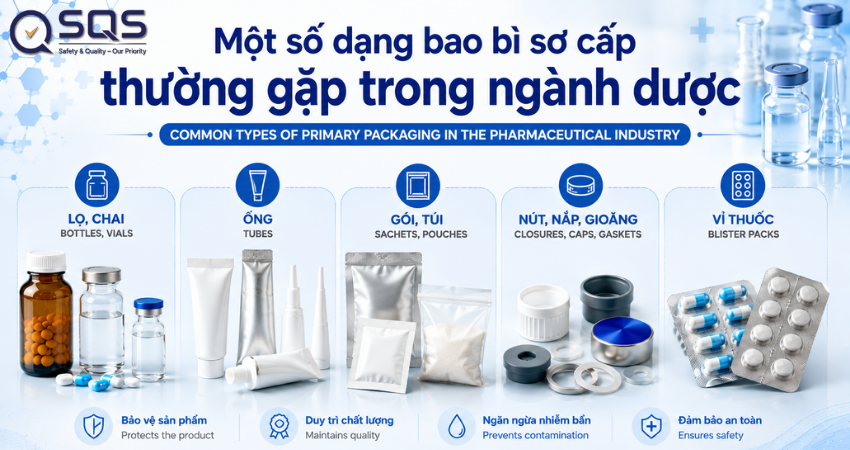
- Material mix-ups: Using the wrong material, component, or packaging specification may result in a nonconforming product.
- Impact on product stability: When packaging does not provide the required protection, environmental factors may affect the quality and stability of the medicinal product during storage.
Risks can originate from raw materials, suppliers, equipment, or manufacturing processes and may directly affect packaging quality. Therefore, organizations need to control quality from the beginning of the manufacturing process rather than relying solely on final product inspection.
ISO 15378:2017 addresses this by requiring organizations to establish and control a quality management system suited to the specific characteristics of primary packaging materials, based on the requirements of ISO 9001:2015 and relevant GMP requirements.
Contact an Expert for Consultation4.2 Benefits of Certification
Achieving certification helps manufacturers of primary packaging materials establish a quality management system suited to the specific requirements of the pharmaceutical industry. This can help organizations to:
- Maintain consistent quality of primary packaging materials throughout the manufacturing process.
- Better control deviations and issues that may affect product quality.
- Provide evidence of their quality management capabilities to customers and business partners.
- Support compliance with customer requirements for supplier evaluation and selection within the pharmaceutical industry.
5. Key GMP Requirements in ISO 15378
Some notable requirements include:
- Contamination control and hygiene: Controlling the hygiene of facilities, equipment, and production areas to limit dust, impurities, microorganisms, or unwanted substances from contaminating the packaging materials.
- Raw material control: Identifying, inspecting, and managing raw materials before use to avoid mix-ups or introducing materials that do not meet requirements into production.
- Manufacturing process control: Controlling critical steps and parameters during the manufacturing process to limit deviations that may affect packaging quality.
- Traceability: Managing information on raw materials and the manufacturing process so that the source of each batch can be identified when a problem arises.

- Change control: Assessing the impact before making changes to materials, equipment, processes, or suppliers that are related to quality.
- Deviation and nonconforming product control: When deviations or products that do not meet requirements are identified, they must be identified, handled, and prevented from continuing to be used or supplied.
- Supplier control: Selecting, evaluating, and monitoring suppliers that have an impact on the quality of raw materials and products.
6. How Is ISO 15378 Different from ISO 9001 and GMP?
All three are related to quality control, but their purposes and scopes of application are different:
| ISO 9001 | GMP | ISO 15378 | |
| Nature | Standard for quality management systems | Principles of good manufacturing practice | Standard for a quality management system for primary packaging materials used for medicinal products |
| Scope | Applicable to various types of organizations and industries | Applicable to manufacturing activities with strict quality control requirements | Organizations that design, manufacture, and supply primary packaging materials for medicinal products |
| Focus | Controlling, maintaining, and improving the quality management system | Controlling manufacturing conditions and processes to produce stable, compliant products | Controlling quality and factors that may affect packaging materials during design, manufacturing, and supply |
| Specific characteristic | Focuses on how an organization operates, establishes, and improves its quality management system. | Provides principles for organizing and controlling manufacturing processes to minimize errors, contamination, and risks affecting product quality. | Specifically developed for the pharmaceutical packaging industry, with requirements suited to the characteristics of primary packaging materials. |
In simple terms, ISO 9001 provides a quality management framework for organizations, GMP provides principles for controlling manufacturing activities, while ISO 15378 specifies a quality management system specifically for primary packaging materials used for medicinal products.
7. FAQ – Frequently Asked Questions About ISO 15378:2017
ISO 15378 uses the requirements of ISO 9001:2015 as its foundation and adds GMP requirements relevant to primary packaging materials used for medicinal products. Therefore, certification is based on the quality management principles of ISO 9001 together with requirements suited to the specific characteristics of primary packaging manufacturing.
Yes. The standard requires organizations to control externally provided processes, products, and services. Organizations need to establish criteria for selecting, evaluating, monitoring, and re-evaluating suppliers based on the extent to which they affect product conformity.
Yes. Organizations must conduct planned internal audits to determine whether the quality management system has been implemented and maintained in accordance with the requirements of the standard.
No. It is not a mandatory standard for all pharmaceutical packaging manufacturers.
Organizations may adopt and obtain certification based on the requirements of customers, business partners, markets, or their internal quality management needs.
For organizations manufacturing primary packaging materials used for medicinal products, the standard provides a specialized quality management framework suited to the specific characteristics of the pharmaceutical industry.
If an organization has already implemented ISO 9001:2015, it already has a foundation for its quality management system. It only needs to add GMP requirements relevant to the manufacturing of primary packaging materials used for medicinal products, focusing on factors specific to the pharmaceutical industry.
**Conclusion
ISO 15378:2017 is a specialized standard for quality management systems covering the design, manufacture, and supply of primary packaging materials used for medicinal products. Applying the ISO 9001:2015 framework together with relevant GMP requirements helps organizations better control processes that may affect packaging quality.
Organizations that manufacture or supply primary packaging materials can use this standard as a basis for standardizing their management system, controlling risks, and meeting customer requirements in the pharmaceutical industry.