BRCGS & FSSC 22000 Training Programs

SQS Global’s BRCGS Food Safety and FSSC 22000 training programs are designed for food manufacturers and processors seeking to develop, implement, and maintain food safety management systems aligned with GFSI-recognized certification schemes, meeting the requirements of customers, retailers, and international markets.

✅ Training materials, practical templates, and post-training expert support included

✅ Flexible BRCGS Food Safety and FSSC 22000 training tailored to your organization’s needs

✅ Latest standard updates with a practical, application-focused learning approach

GET 10% OFF – REGISTER EARLY
Khóa đào tạo BRCGS/FSSC 22000

BRCGS & FSSC 22000 Training Programs

SQS Global’s BRCGS Food Safety and FSSC 22000 training programs are designed for food manufacturers and processors seeking to develop, implement, and maintain food safety management systems aligned with GFSI-recognized certification schemes, meeting the requirements of customers, retailers, and international markets.

✅ Training materials, practical templates, and post-training expert support included

✅ Flexible BRCGS Food Safety and FSSC 22000 training tailored to your organization’s needs

✅ Latest standard updates with a practical, application-focused learning approach

GET 10% OFF – REGISTER EARLY
Khóa đào tạo BRCGS/FSSC 22000

Both BRCGS Food Safety and FSSC 22000 are GFSI-recognized food safety certification schemes. However, each standard has its own scope, requirements, and intended applications. Therefore, SQS Global delivers separate training programs for each standard, enabling organizations to select the course that best aligns with their business objectives and certification goals. If you are unsure which training program is right for your organization, please contact our experts at hotline: 0858.658.856 for professional guidance and recommendations.

BRCGS Food Safety or FSSC 22000 – Which Training Program Is Right for Your Organization?

SQS Global provides the following guidance to help organizations identify the most suitable BRCGS Food Safety or FSSC 22000 training program. If your role or organization matches one of the profiles below, contact SQS Global for expert advice and choose the training course that best supports your implementation and certification objectives.

Who Should Attend BRCGS Food Safety Training?

  • QA/QC Managers and Supervisors
  • Production Managers and Plant Managers
  • HACCP Team Members and Food Safety Personnel
  • Personnel responsible for BRCGS or GFSI systems
  • Organizations required by customers or retailers to obtain BRC cer
  • Organizations preparing for initial or recertification BRCGS audits

==> BRCGS TRAINING COURSE 

BRC

Who Should Attend FSSC 22000 Training?

  • Senior Management of food manufacturing organizations
  • QA/QC Managers and Supervisors
  • HACCP Team Members and Food Safety Personnel
  • Personnel responsible for ISO 22000 or FSSC 22000 systems
  • Organizations preparing for FSSC 22000 certification
  • Organizations transitioning from ISO 22000 to FSSC 22000

==> FSSC 22000 TRAINING COURSE

FSSC 22000

BRCGS Food Safety Issue 9 Training Program

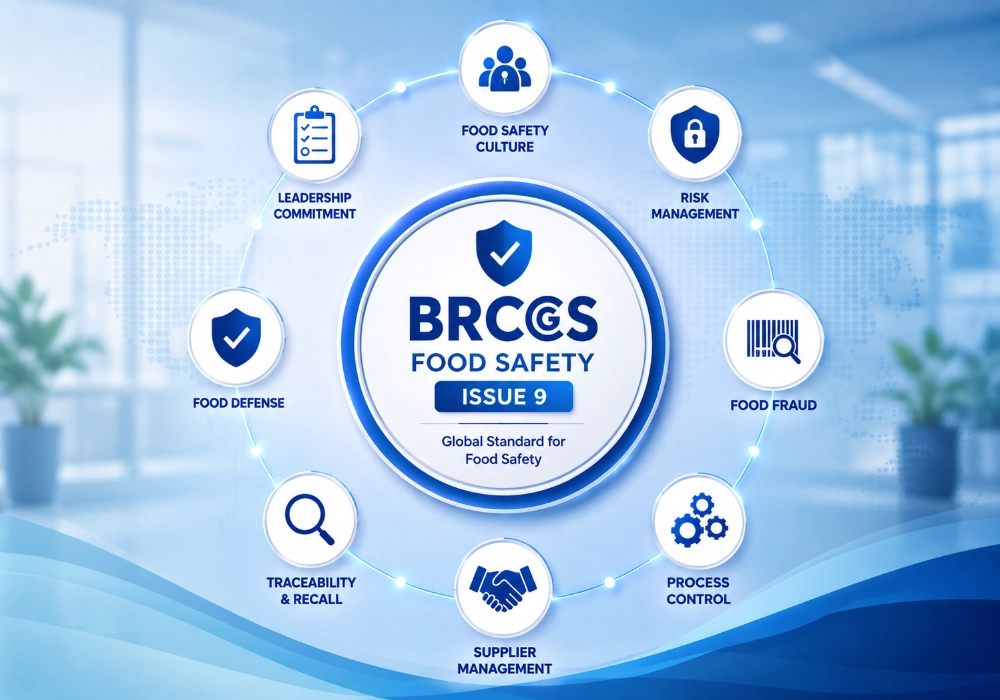
BRCGS Food Safety Issue 9 is the latest version of the BRCGS Food Safety Standard, introducing enhanced requirements for Food Safety Culture, risk management, and food safety system effectiveness to meet the increasing expectations of retailers, brand owners, and global markets.

At SQS Global, the BRCGS Food Safety Issue 9 training program is developed in accordance with the latest standard requirements, providing participants with up-to-date knowledge of BRCGS requirements and current food safety regulations through a practical, application-oriented learning approach.

Training Outcomes

✅ Understand and apply the requirements of BRCGS Food Safety Issue 9 within your organization.

✅ Develop and improve food safety management documentation, procedures, and operational controls in accordance with the standard.

✅ Effectively implement Food Safety Culture, Food Defense, Food Fraud Prevention, HACCP, and Traceability requirements.

✅ Plan and conduct Internal Audits, identify nonconformities, and implement effective corrective actions before certification audits.

✅ Gain the confidence to prepare documentation, work with certification bodies, and meet customer and retailer requirements throughout the food supply chain.

Khóa đào tạo BRCGS tại SQS Global
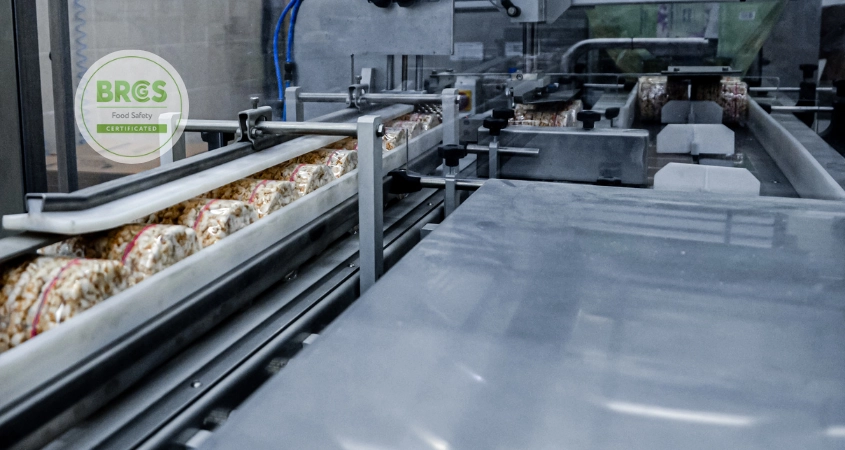
Nhà máy sản xuất đạt chuẩn BRCGS

BRCGS Food Safety Training Curriculum at SQS Global

The training curriculum combines technical knowledge, practical implementation experience, and common certification audit scenarios, enabling participants to confidently apply the BRCGS Food Safety requirements in their organizations and prepare effectively for certification.

The program is delivered over 2 days (4 sessions), with each session focusing on a dedicated topic that integrates theory, practical discussions, and real-world case studies.

This session provides participants with a comprehensive overview of BRCGS Food Safety Issue 9, including its role within the GFSI-recognized certification framework, the scope of application, and the key changes introduced in the latest edition. Participants will gain a solid foundation for understanding and implementing the standard.

Training Content

  • Introduction to BRCGS Food Safety and GFSI
  • Scope of certification and applicable organizations
  • Structure of BRCGS Food Safety Issue 9
  • Key updates introduced in Issue 9
  • Essential terminology and core concepts
  • Benefits of implementing BRCGS Food Safety

This session focuses on interpreting the core requirements of BRCGS Food Safety, helping participants understand the intent behind each requirement and how to apply them effectively within food manufacturing operations.

Training Content

  • Senior management commitment and food safety management
  • HACCP implementation in accordance with BRCGS requirements
  • Site standards, facilities, and production environment
  • Control of raw materials, packaging, products, and manufacturing processes
  • Personnel competence, training, and hygiene
  • Prerequisite programs (PRPs) and operational control requirements

This session provides practical guidance on implementing BRCGS Food Safety requirements through documentation development, operational procedures, and practical solutions for common implementation challenges.

Training Content

  • Developing BRCGS documentation and records
  • Implementing Food Safety Culture within the organization
  • Food Defense and Food Fraud Prevention
  • Traceability and product recall management
  • Case studies and implementation best practices
  • Practical exercises and documentation workshops

The final session consolidates the knowledge gained throughout the course, addresses participants’ questions, and evaluates learning outcomes through a final assessment. Participants who successfully complete the program will receive a Certificate of Completion issued by SQS Global.

Training Content

  • Review of key course concepts
  • Q&A and discussion of practical implementation issues
  • Final knowledge assessment
  • Course summary and feedback
  • Awarding of the SQS Global Certificate of Completion

BRCGS Food Safety Issue 9 Training Program

BRCGS Food Safety Issue 9 is the latest version of the BRCGS Food Safety Standard, introducing enhanced requirements for Food Safety Culture, risk management, and food safety system effectiveness to meet the increasing expectations of retailers, brand owners, and global markets.

At SQS Global, the BRCGS Food Safety Issue 9 training program is developed in accordance with the latest standard requirements, providing participants with up-to-date knowledge of BRCGS requirements and current food safety regulations through a practical, application-oriented learning approach.

Khóa đào tạo BRCGS tại SQS Global

Training Outcomes

✅ Understand and apply the requirements of BRCGS Food Safety Issue 9 within your organization.

✅ Develop and improve food safety management documentation, procedures, and operational controls in accordance with the standard.

✅ Effectively implement Food Safety Culture, Food Defense, Food Fraud Prevention, HACCP, and Traceability requirements.

✅ Plan and conduct Internal Audits, identify nonconformities, and implement effective corrective actions before certification audits.

✅ Gain the confidence to prepare documentation, work with certification bodies, and meet customer and retailer requirements throughout the food supply chain.

Nhà máy sản xuất đạt chuẩn BRCGS

BRCGS Food Safety Training Curriculum at SQS Global

The training curriculum combines technical knowledge, practical implementation experience, and common certification audit scenarios, enabling participants to confidently apply the BRCGS Food Safety requirements in their organizations and prepare effectively for certification.

The program is delivered over 2 days (4 sessions), with each session focusing on a dedicated topic that integrates theory, practical discussions, and real-world case studies.

This session provides participants with a comprehensive overview of BRCGS Food Safety Issue 9, including its role within the GFSI-recognized certification framework, the scope of application, and the key changes introduced in the latest edition. Participants will gain a solid foundation for understanding and implementing the standard.

Training Content

  • Introduction to BRCGS Food Safety and GFSI
  • Scope of certification and applicable organizations
  • Structure of BRCGS Food Safety Issue 9
  • Key updates introduced in Issue 9
  • Essential terminology and core concepts
  • Benefits of implementing BRCGS Food Safety

This session focuses on interpreting the core requirements of BRCGS Food Safety, helping participants understand the intent behind each requirement and how to apply them effectively within food manufacturing operations.

Training Content

  • Senior management commitment and food safety management
  • HACCP implementation in accordance with BRCGS requirements
  • Site standards, facilities, and production environment
  • Control of raw materials, packaging, products, and manufacturing processes
  • Personnel competence, training, and hygiene
  • Prerequisite programs (PRPs) and operational control requirements

This session provides practical guidance on implementing BRCGS Food Safety requirements through documentation development, operational procedures, and practical solutions for common implementation challenges.

Training Content

  • Developing BRCGS documentation and records
  • Implementing Food Safety Culture within the organization
  • Food Defense and Food Fraud Prevention
  • Traceability and product recall management
  • Case studies and implementation best practices
  • Practical exercises and documentation workshops

The final session consolidates the knowledge gained throughout the course, addresses participants’ questions, and evaluates learning outcomes through a final assessment. Participants who successfully complete the program will receive a Certificate of Completion issued by SQS Global.

Training Content

  • Review of key course concepts
  • Q&A and discussion of practical implementation issues
  • Final knowledge assessment
  • Course summary and feedback
  • Awarding of the SQS Global Certificate of Completion

FSSC 22000 Training Program

The FSSC 22000 Training Program is designed for professionals seeking to understand and implement a Food Safety Management System (FSMS) based on FSSC 22000 Version 6. The course covers the requirements of ISO 22000:2018, Prerequisite Programs (PRPs), HACCP, and the additional FSSC 22000 requirements, equipping participants with the knowledge and practical skills to develop, implement, maintain, and continually improve an effective food safety management system.

Training Outcomes

✅ Understand the structure of ISO 22000:2018, PRPs, and the additional requirements of FSSC 22000 Version 6.

✅ Develop the capability to establish, implement, and maintain an effective Food Safety Management System (FSMS).

✅ Understand how to identify PRPs, OPRPs, CCPs, perform hazard analysis, and implement appropriate risk control measures.

✅ Apply risk-based thinking and continual improvement principles to strengthen food safety management practices.

✅ Gain the knowledge and confidence to support the implementation, maintenance, and continual improvement of FSSC 22000 within an organization.

Khóa đào tạo FSSC 22000

FSSC 22000 Training Curriculum at SQS Global

At SQS Global, the FSSC 22000 Version 6 Training Program follows the principle of “Understand the Standard – Apply with Confidence – Implement Successfully.” The course combines technical knowledge with practical implementation experience, enabling participants not only to understand the standard requirements but also to develop, implement, maintain, and continually improve an effective Food Safety Management System (FSMS).

The first session provides a solid foundation in FSSC 22000 Version 6, introducing the principles of Food Safety Management Systems (FSMS) and explaining the relationship between ISO 22000:2018, Prerequisite Programs (PRPs), and the additional FSSC 22000 requirements. Participants will gain a clear understanding of the framework for implementing an effective food safety management system.

Course Outline

  • Introduction to FSSC 22000 and Food Safety Management Systems (FSMS)
  • The role of ISO 22000, PRPs, and additional FSSC requirements
  • Structure and scope of FSSC 22000 Version 6
  • Regulatory requirements for food safety management
  • Benefits of implementing FSSC 22000
  • Roadmap for implementing a Food Safety Management System

This session explains how to establish, implement, and maintain an effective Food Safety Management System (FSMS) in accordance with ISO 22000:2018 and FSSC 22000 Version 6, ensuring effective operational control and continual improvement.

Course Outline

  • ISO 22000:2018 requirements for establishing an FSMS
  • Organizational context, food safety policy, and objectives
  • Development of FSSC 22000 documentation, procedures, and records
  • Documented information and document control
  • Leadership responsibilities and organizational roles
  • System operation, performance monitoring, and continual improvement

This session focuses on hazard identification, risk assessment, and the implementation of effective control measures based on HACCP, PRPs, OPRPs, and CCPs to ensure food safety throughout the production process.

Course Outline

  • Overview of HACCP within FSSC 22000
  • Establishing and managing Prerequisite Programs (PRPs)
  • Hazard identification and risk assessment
  • Determining OPRPs and CCPs
  • Traceability and control of nonconforming products

The final session enables participants to apply their knowledge through practical exercises and real-world case studies while reinforcing key concepts through a final assessment. Participants who successfully complete the course will receive a Certificate of Completion issued by SQS Global.

Course Outline

  • Practical development of FSSC 22000 documentation and templates
  • Case studies on FSSC 22000 implementation
  • Troubleshooting common implementation challenges
  • Review of key course concepts
  • Final assessment
  • Course summary and award of the Certificate of Completion

SQS Global does not follow a one-size-fits-all training approach. Our BRCGS Food Safety and FSSC 22000 training programs are tailored to each participant’s learning needs and objectives, enabling them to acquire relevant knowledge and confidently apply it in real-world working environments.

FSSC 22000 Training Program

The FSSC 22000 Training Program is designed for professionals seeking to understand and implement a Food Safety Management System (FSMS) based on FSSC 22000 Version 6. The course covers the requirements of ISO 22000:2018, Prerequisite Programs (PRPs), HACCP, and the additional FSSC 22000 requirements, equipping participants with the knowledge and practical skills to develop, implement, maintain, and continually improve an effective food safety management system.

Khóa đào tạo FSSC 22000

Training Outcomes

✅ Understand the structure of ISO 22000:2018, PRPs, and the additional requirements of FSSC 22000 Version 6.

✅ Develop the capability to establish, implement, and maintain an effective Food Safety Management System (FSMS).

✅ Understand how to identify PRPs, OPRPs, CCPs, perform hazard analysis, and implement appropriate risk control measures.

✅ Apply risk-based thinking and continual improvement principles to strengthen food safety management practices.

✅ Gain the knowledge and confidence to support the implementation, maintenance, and continual improvement of FSSC 22000 within an organization.

FSSC 22000 Training Curriculum at SQS Global

At SQS Global, the FSSC 22000 Version 6 Training Program follows the principle of “Understand the Standard – Apply with Confidence – Implement Successfully.” The course combines technical knowledge with practical implementation experience, enabling participants not only to understand the standard requirements but also to develop, implement, maintain, and continually improve an effective Food Safety Management System (FSMS).

The first session provides a solid foundation in FSSC 22000 Version 6, introducing the principles of Food Safety Management Systems (FSMS) and explaining the relationship between ISO 22000:2018, Prerequisite Programs (PRPs), and the additional FSSC 22000 requirements. Participants will gain a clear understanding of the framework for implementing an effective food safety management system.

Course Outline

  • Introduction to FSSC 22000 and Food Safety Management Systems (FSMS)
  • The role of ISO 22000, PRPs, and additional FSSC requirements
  • Structure and scope of FSSC 22000 Version 6
  • Regulatory requirements for food safety management
  • Benefits of implementing FSSC 22000
  • Roadmap for implementing a Food Safety Management System

This session explains how to establish, implement, and maintain an effective Food Safety Management System (FSMS) in accordance with ISO 22000:2018 and FSSC 22000 Version 6, ensuring effective operational control and continual improvement.

Course Outline

  • ISO 22000:2018 requirements for establishing an FSMS
  • Organizational context, food safety policy, and objectives
  • Development of FSSC 22000 documentation, procedures, and records
  • Documented information and document control
  • Leadership responsibilities and organizational roles
  • System operation, performance monitoring, and continual improvement

This session focuses on hazard identification, risk assessment, and the implementation of effective control measures based on HACCP, PRPs, OPRPs, and CCPs to ensure food safety throughout the production process.

Course Outline

  • Overview of HACCP within FSSC 22000
  • Establishing and managing Prerequisite Programs (PRPs)
  • Hazard identification and risk assessment
  • Determining OPRPs and CCPs
  • Traceability and control of nonconforming products

The final session enables participants to apply their knowledge through practical exercises and real-world case studies while reinforcing key concepts through a final assessment. Participants who successfully complete the course will receive a Certificate of Completion issued by SQS Global.

Course Outline

  • Practical development of FSSC 22000 documentation and templates
  • Case studies on FSSC 22000 implementation
  • Troubleshooting common implementation challenges
  • Review of key course concepts
  • Final assessment
  • Course summary and award of the Certificate of Completion

SQS Global does not follow a one-size-fits-all training approach. Our BRCGS Food Safety and FSSC 22000 training programs are tailored to each participant’s learning needs and objectives, enabling them to acquire relevant knowledge and confidently apply it in real-world working environments.

Flexible Training Delivery Options

SQS Global offers BRCGS Food Safety and FSSC 22000 training through flexible delivery formats to meet the learning needs of both individuals and organizations. Depending on the number of participants, training objectives, and implementation plans, you can choose the most suitable option to maximize learning effectiveness while optimizing time and cost.

In-house Training

Training is delivered directly at your facility, allowing participants to learn within their actual operational environment with content tailored to your organization’s needs.

✅ Flexible schedule and location

✅ Tailored to your business operations

✅ Ideal for group training

Training at SQS Global

Attend scheduled training at SQS Global’s training center and learn in a professional environment with experienced instructors and practical discussions.

✅ Regular training schedule

✅ Professional learning environment

✅ Interactive discussions with expe

Online Training

Attend live instructor-led training from anywhere while enjoying the same structured learning experience and interactive sessions.

✅ Learn from anywhere

✅ Save travel time and costs

✅ Live interaction with instructors