FSSC 22000 assessment & certification services

✓ FSSC 22000 certification is globally recognized by GFSI and widely accepted by multinational corporations, retailers, and international export markets

✓ Enhances competitiveness and supports participation in global food supply chains, OEM partnerships, and export activities

✓ Certification records can be verified through the international verification platform IAFCERTSEARCH.ORG

✓ SQS Global provides assessment and certification support for FSSC 22000 in accordance with internationally recognized requirements and accreditation standards

✓ Experienced consultants deliver training, practical guidance, and hands-on implementation support throughout the FSSC 22000 journey

✓ A structured implementation approach covering documentation development, employee training, and certification readiness

✓ Supports organizations in strengthening their Food Safety Management System (FSMS), controlling food safety hazards, and meeting customer and audit requirements worldwide
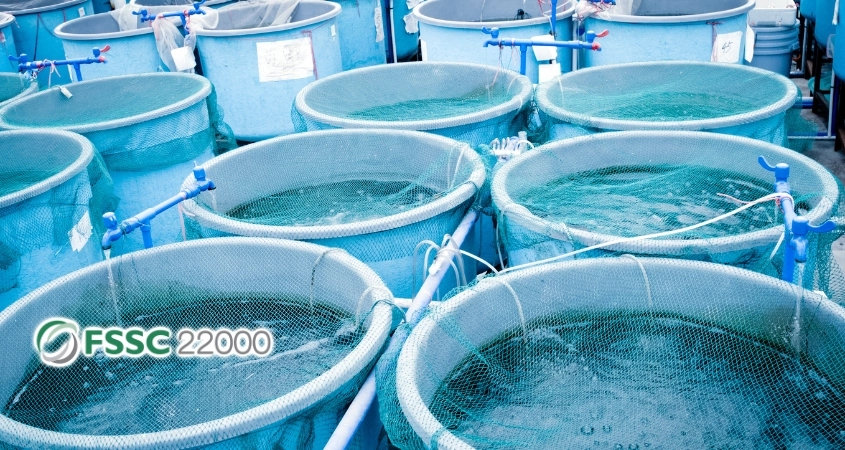
Chứng nhận fssc 22000 cho hộ nuôi trồng thủy sản
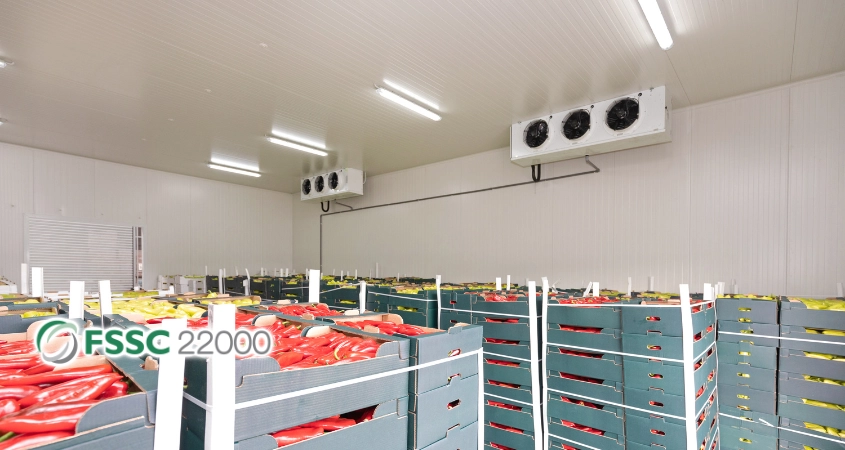
chứng nhận fssc 22000 cho kho lưu trữ thực phẩm
chứng nhận fssc 22000 cho nhà máy thực phẩm

FSSC 22000 assessment & certification services

✓ FSSC 22000 certification is globally recognized by GFSI and widely accepted by multinational corporations, retailers, and international export markets

✓ Enhances competitiveness and supports participation in global food supply chains, OEM partnerships, and export activities

✓ Certification records can be verified through the international verification platform IAFCERTSEARCH.ORG

✓ SQS Global provides assessment and certification support for FSSC 22000 in accordance with internationally recognized requirements and accreditation standards

✓ Experienced consultants deliver training, practical guidance, and hands-on implementation support throughout the FSSC 22000 journey

✓ A structured implementation approach covering documentation development, employee training, and certification readiness

✓ Supports organizations in strengthening their Food Safety Management System (FSMS), controlling food safety hazards, and meeting customer and audit requirements worldwide

FSSC 22000 Food Safety Management System Certification

FSSC 22000 (Food Safety System Certification 22000) is a globally recognized food safety management system certification scheme based on ISO 22000 and integrated with Prerequisite Programs (PRPs) and additional food sector requirements. It is one of the leading food safety certification standards recognized by the Global Food Safety Initiative (GFSI).

Latest version of FSSC 22000

The latest version of the FSSC 22000 certification scheme is FSSC 22000 Version 6, which became effective in April 2023.

Organizations may be audited against Version 6 until 31 March 2025. After this date, all certified organizations are required to transition to and be assessed against Version 6.1 to maintain certification validity.

Reference documents:: Donwload FSSC 22000 Version 6,Download FSSC 22000 Version 7

Organizations eligible for FSSC 22000 certification

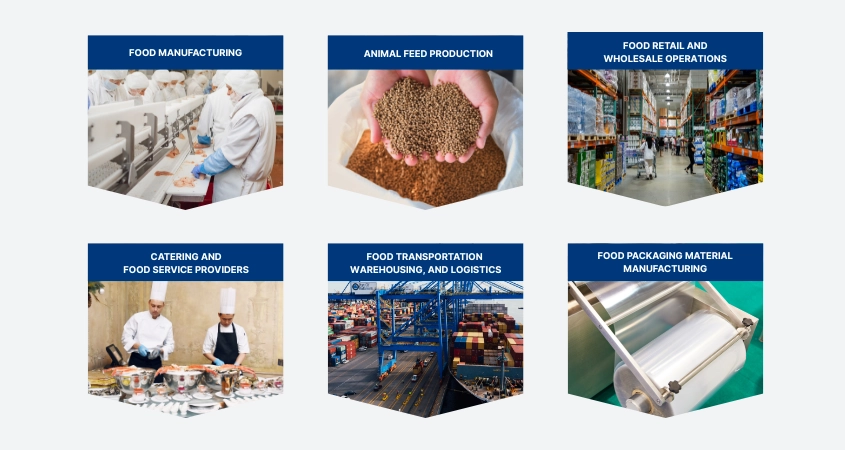
The FSSC 22000 certification scheme is designed for the assessment and certification of Food Safety Management Systems for organizations operating in the following sectors:

  • Farming
  • Food manufacturing
  • Animal feed production
  • Food retail and wholesale
  • Catering and food service providers
  • Food transportation, storage, and logistics
  • Food packaging and food packaging material manufacturing
Organizations eligible for FSSC 22000 certification

Organizations eligible for FSSC 22000 certification

The FSSC 22000 certification scheme is designed for the assessment and certification of Food Safety Management Systems for organizations operating in the following sectors:

  • Farming
  • Food manufacturing
  • Animal feed production
  • Food retail and wholesale
  • Catering and food service providers
  • Food transportation, storage, and logistics
  • Food packaging and food packaging material manufacturing
Organizations eligible for FSSC 22000 certification

Benefits of FSSC 22000 certification

Obtaining FSSC 22000 certification helps organizations

Hệ thống đánh giá FSSC 22000 trong nhà máy thực phẩm

Establish a structured FSMS

  • Standardize food safety management processes in accordance with FSSC 22000 requirements
  • Control food safety hazards throughout production, processing, and preservation activities
  • Improve product traceability and quality control capabilities
  • Meet the requirements of internationally recognized Food Safety Management Systems (FSMS)
Chứng nhận FSSC 22000 có thể thay thế giấy phép ATTP

Alternative to Food Safety Eligibility Cer

  • May serve as an alternative to the Food Safety Eligibility Certificate in accordance with applicable regulations
  • Supports organizations in meeting legal and regulatory requirements related to food business operations
  • Reduces administrative procedures associated with food safety inspections in certain sectors
  • Facilitates audits and business activities with customers and business partners
Chứng nhận FSSC 22000 giúp mở rộng thị trường xuất khẩu thực phẩm

Enhance reputation Export opportunities

  • Recognized by GFSI and widely accepted across global food supply chains
  • Strengthens competitiveness when working with multinational corporations, retailers, and supermarket chains
  • Supports expansion into export markets such as the United States, the European Union, Japan, South Korea,…
  • Enhances brand reputation and customer confidence

Prerequisites for FSSC 22000 Certification

  1. Organizations must establish and implement a Food Safety Management System based on ISO 22000, together with applicable Prerequisite Programs (PRPs) in accordance with ISO/TS 22002 requirements relevant to their sector.
  2. The FSMS must be effectively implemented and maintained to control food safety hazards throughout the entire production, processing, storage, and distribution process.
  3. Organizations should conduct employee training, internal audits, and system preparation activities before applying for FSSC 22000 certification.

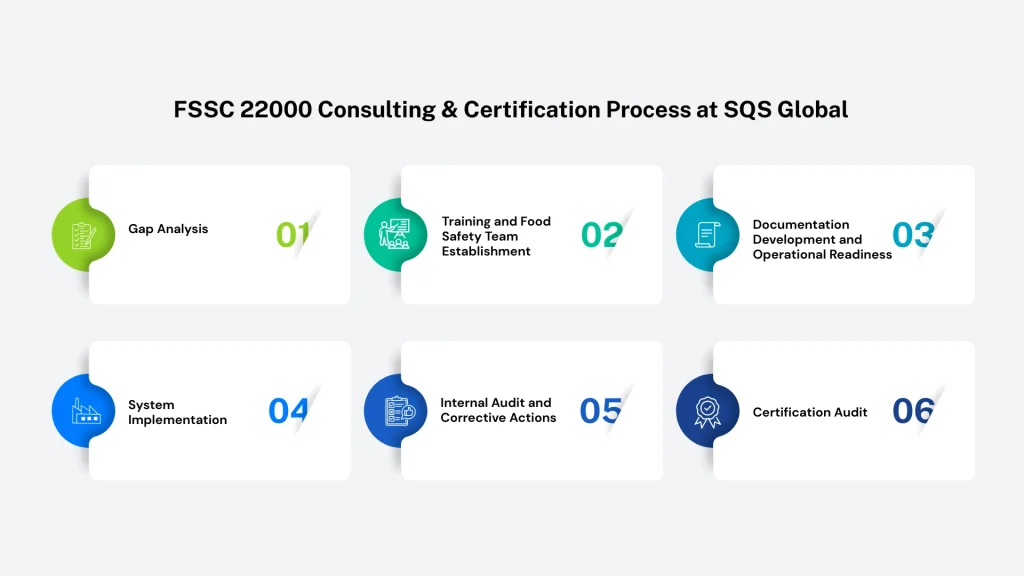
FSSC 22000 Consulting & Certification Process at SQS Global

Depending on the organization’s industry sector and operational scope, specific requirements may apply regarding documented information, Prerequisite Programs (PRPs), and operational controls under the FSSC 22000 scheme. Therefore, the implementation process should be tailored to the organization’s actual operations and business needs.

At SQS Global, FSSC 22000 certification services are delivered through a comprehensive approach that includes consulting, training, implementation support, and certification assessment. Our team works closely with organizations to develop effective and practical food safety management systems, helping optimize implementation time, improve operational performance, and increase the likelihood of achieving certification on the first audit.

At the initial stage, SQS Global conducts an on-site assessment to evaluate the organization’s current level of compliance with FSSC 22000 requirements. The assessment typically focuses on:

  • Prerequisite Programs (PRPs)
  • Operational procedures and controls
  • HACCP documentation
  • Traceability systems
  • Food safety risks throughout the production process

Through this assessment, organizations can identify strengths, areas for improvement, and an appropriate implementation roadmap before deploying the system in practice.

FSSC 22000 awareness training is provided to relevant personnel to ensure effective implementation of the system throughout the organization.

In addition, key personnel receive specialized training on hazard analysis, critical control measures, Food Defense (TACCP), Food Fraud Prevention (VACCP), and food safety controls required for daily operations.

At the same time, a Food Safety Team is established with representatives from key departments such as QA/QC, production, maintenance, warehousing, and operations to support system implementation, monitoring, and continual improvement.

SQS Global works closely with the organization to develop a practical documentation system aligned with actual operational activities. This includes quality control procedures, work instructions, records, and forms used for monitoring and traceability.

The documentation system typically includes:

  • Management System Documentation: Food Safety Policy, Food Safety Objectives, Food Safety Manual, Management system procedures
  • Food Safety Control Documentation: Prerequisite Programs (PRPs), HACCP Plan, CCP and OPRP control procedures, Food safety hazard control measures

In addition, organizations may need to review and improve facility conditions, including material flow, cross-contamination prevention, ventilation, lighting, access control, and hygiene conditions within production areas.

At this stage, all FSSC 22000 procedures and control measures are implemented in daily operations to demonstrate system effectiveness and compliance during certification audits.

Key activities include:

  • Maintaining hygiene and environmental controls in accordance with PRP requirements
  • Monitoring CCPs and OPRPs
  • Maintaining operational records and traceability documentation
  • Controlling raw materials, allergens, and cross-contamination risks
  • Implementing Food Defense and Food Fraud Prevention measures
  • Conducting emergency response, product recall, and food safety incident management activities

The organization conducts internal audits to evaluate the effectiveness and performance of the FSSC 22000 system in practice.

Any identified nonconformities are documented, analyzed, and corrected to improve system performance before the certification audit.

Management reviews are also conducted to assess system effectiveness, food safety objectives, and resource commitments for continual improvement.

The organization proceeds with certification assessment by an accredited certification body, such as SQS Global, through a two-stage audit process:

  • Stage 1 Audit: Documentation review to verify compliance with FSSC 22000 requirements
  • Stage 2 Audit: On-site assessment to evaluate the effectiveness and implementation of the Food Safety Management System in actual operations

Important Note: FSSC 22000 certification is valid for three (3) years. During this period, SQS Global conducts annual surveillance audits (typically every 12 months) to verify the continued effectiveness of the Food Safety Management System. In addition, at least one unannounced audit may be conducted during the three-year certification cycle by the certification body.

FSSC 22000 Consulting & Certification Process at SQS Global

Depending on the organization’s industry sector and operational scope, specific requirements may apply regarding documented information, Prerequisite Programs (PRPs), and operational controls under the FSSC 22000 scheme. Therefore, the implementation process should be tailored to the organization’s actual operations and business needs.

At SQS Global, FSSC 22000 certification services are delivered through a comprehensive approach that includes consulting, training, implementation support, and certification assessment. Our team works closely with organizations to develop effective and practical food safety management systems, helping optimize implementation time, improve operational performance, and increase the likelihood of achieving certification on the first audit.

At the initial stage, SQS Global conducts an on-site assessment to evaluate the organization’s current level of compliance with FSSC 22000 requirements. The assessment typically focuses on:

  • Prerequisite Programs (PRPs)
  • Operational procedures and controls
  • HACCP documentation
  • Traceability systems
  • Food safety risks throughout the production process

Through this assessment, organizations can identify strengths, areas for improvement, and an appropriate implementation roadmap before deploying the system in practice.

FSSC 22000 awareness training is provided to relevant personnel to ensure effective implementation of the system throughout the organization.

In addition, key personnel receive specialized training on hazard analysis, critical control measures, Food Defense (TACCP), Food Fraud Prevention (VACCP), and food safety controls required for daily operations.

At the same time, a Food Safety Team is established with representatives from key departments such as QA/QC, production, maintenance, warehousing, and operations to support system implementation, monitoring, and continual improvement.

SQS Global works closely with the organization to develop a practical documentation system aligned with actual operational activities. This includes quality control procedures, work instructions, records, and forms used for monitoring and traceability.

The documentation system typically includes:

  • Management System Documentation: Food Safety Policy, Food Safety Objectives, Food Safety Manual, Management system procedures
  • Food Safety Control Documentation: Prerequisite Programs (PRPs), HACCP Plan, CCP and OPRP control procedures, Food safety hazard control measures

In addition, organizations may need to review and improve facility conditions, including material flow, cross-contamination prevention, ventilation, lighting, access control, and hygiene conditions within production areas.

At this stage, all FSSC 22000 procedures and control measures are implemented in daily operations to demonstrate system effectiveness and compliance during certification audits.

Key activities include:

  • Maintaining hygiene and environmental controls in accordance with PRP requirements
  • Monitoring CCPs and OPRPs
  • Maintaining operational records and traceability documentation
  • Controlling raw materials, allergens, and cross-contamination risks
  • Implementing Food Defense and Food Fraud Prevention measures
  • Conducting emergency response, product recall, and food safety incident management activities

The organization conducts internal audits to evaluate the effectiveness and performance of the FSSC 22000 system in practice.

Any identified nonconformities are documented, analyzed, and corrected to improve system performance before the certification audit.

Management reviews are also conducted to assess system effectiveness, food safety objectives, and resource commitments for continual improvement.

The organization proceeds with certification assessment by an accredited certification body, such as SQS Global, through a two-stage audit process:

  • Stage 1 Audit: Documentation review to verify compliance with FSSC 22000 requirements
  • Stage 2 Audit: On-site assessment to evaluate the effectiveness and implementation of the Food Safety Management System in actual operations

Important Note: FSSC 22000 certification is valid for three (3) years. During this period, SQS Global conducts annual surveillance audits (typically every 12 months) to verify the continued effectiveness of the Food Safety Management System. In addition, at least one unannounced audit may be conducted during the three-year certification cycle by the certification body.

FSSC 22000 Certificate Sample at SQS Global

This is a sample FSSC 22000 Certificate issued by SQS Global, valid nationwide and recognized in accordance with the requirements of the FSSC 22000 Certification Scheme.

The certificate demonstrates that an organization has successfully established and effectively implemented a Food Safety Management System (FSMS) that complies with the FSSC 22000 standard. It reflects the organization’s commitment to food safety, strengthens brand credibility, meets customer and regulatory requirements, and supports participation in both domestic and international food supply chains.

Get Started Today – Enjoy 10% Off
FSSC 22000 certificate SQS Global

FSSC 22000 Consulting & Certification Services by SQS Global

SQS Global supports organizations throughout the entire FSSC 22000 journey, from initial gap assessment and system development to employee training, implementation, and certification.

Our FSSC 22000 consulting services are delivered with a practical approach focused on operational efficiency and long-term system effectiveness.

On-site Assessment

We do not apply generic documentation templates. SQS Global develops management systems based on your organization’s actual operations, facilities, and current level of compliance.

Experienced Consultants

Our consultants have over 10 years of experience working with food manufacturers and possess in-depth knowledge of food safety regulations, certification requirements, and operational best practices.

Commitment to Your Success

We provide continuous support throughout implementation, employee training, and certification preparation through online and on-site activities, helping organizations achieve certification efficiently and effectively.

Focus on Business Efficiency

Our approach helps organizations reduce unnecessary implementation costs, minimize errors, improve operational performance, and strengthen internal food safety management capabilities.

Frequently Asked Questions About FSSC 22000

The cost of FSSC 22000 certification varies depending on factors such as the number of employees, production lines, facility size, and the organization’s existing level of compliance.

Costs typically include facility upgrades (if required), training and consulting services, and certification audit fees. SQS Global provides an initial assessment and customized quotation based on each organization’s specific requirements.

In most cases, a FSSC 22000 implementation project takes between 6 and 9 months, from the initial assessment through to certification. The timeframe may be shorter or longer depending on the organization’s current infrastructure, system maturity, and management commitment.

Yes. HACCP is a core foundation of the FSSC 22000 scheme. Organizations that have already implemented HACCP have completed a significant portion of the requirements.

The remaining work typically involves implementing ISO 22000 management system requirements, applicable PRPs under ISO/TS 22002, and additional FSSC 22000 requirements such as Food Defense and Food Fraud Prevention.

Yes. Under applicable Vietnamese regulations, organizations holding valid certifications such as GMP, HACCP, ISO 22000, FSSC 22000, BRCGS, or IFS may be exempt from obtaining a Food Safety Eligibility Certificate, subject to relevant legal requirements.

For organizations already certified to ISO 22000, obtaining FSSC 22000 certification is generally not a legal requirement.

However, it is highly recommended for organizations seeking to export products or participate in global food supply chains, as FSSC 22000 is recognized by GFSI and widely accepted by multinational corporations, retailers, and international food brands.

Other Certification Services Offered by SQS Global

Pharmaceutical & Cosmetics Industry

ISO 13485

ISO 13485 Certification

Other Certification Services Offered by SQS Global

Pharmaceutical & Cosmetics Industry

ISO 13485

ISO 13485 Certification